
Every minute of unplanned downtime on a casino floor carries immediate financial consequences and potential regulatory implications. When an RFID casino table loses power during active gameplay, chip tracking halts, player position data becomes inaccessible, and the pit supervisor loses real-time visibility into table activity. For casino operators who have invested in RFID-enabled gaming floors, implementing robust power backup solutions is not optional, it is a fundamental operational requirement.
This article explores the power backup landscape for RFID casino table systems, examining the technical challenges, solution options, and implementation strategies that enable casino operators to maintain continuous chip tracking capability regardless of power conditions. From integrated battery backup modules to facility-wide uninterruptible power systems, the right power backup architecture ensures that gaming integrity and operational continuity are never compromised by something as preventable as a power failure.
The Stakes of Power Loss at RFID Casino Tables
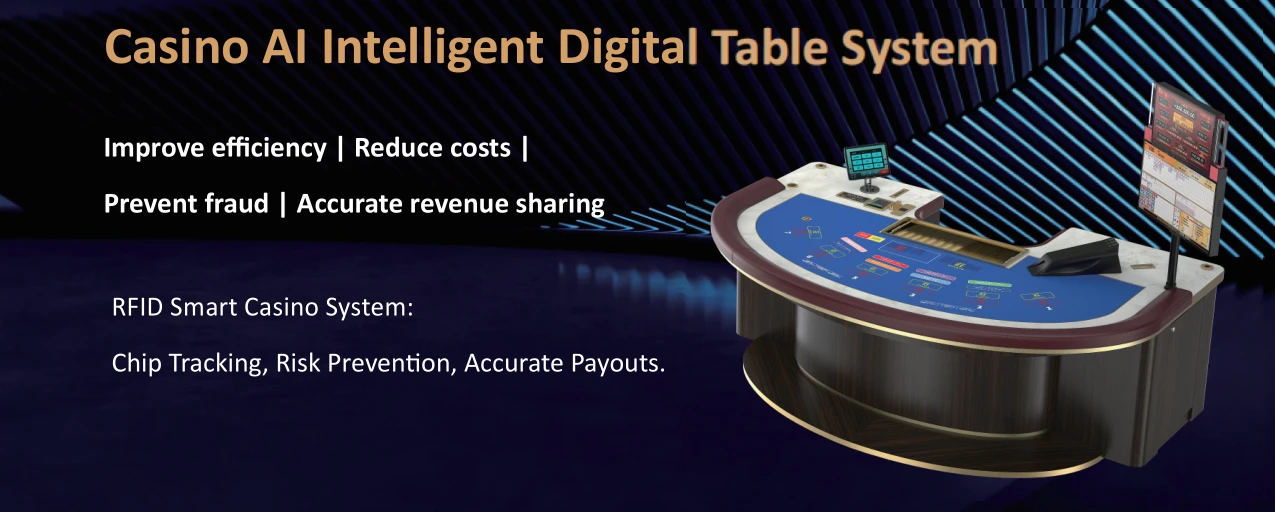
To understand why power backup matters so profoundly, casino operators must first appreciate the cascading consequences of power loss at an RFID-enabled gaming table. The RFID reader embedded in the table requires continuous power to maintain its electromagnetic field, which is the mechanism by which chip detection occurs. When power is interrupted, the reader stops transmitting, and chip tracking ceases entirely.
During the interval between power loss and restoration, every chip on the table becomes invisible to the casino management system. Chips that are counted and reconciled before the outage may be counted again after restoration, creating phantom inventory increases. Conversely, chips that were in transit or temporarily removed from the table during the outage may not be registered in either period, creating inventory discrepancies that require manual resolution.
Regulatory compliance represents an equally serious concern. Gaming regulators in most jurisdictions require continuous gaming floor surveillance and data recording capabilities. A power interruption that suspends chip tracking may create a gap in the electronic audit trail that regulators scrutinize during routine examinations or incident investigations. Casinos must demonstrate that power disruptions do not create opportunities for chip fraud, theft, or manipulation.
Beyond regulatory considerations, the customer experience suffers when power interruptions interrupt active games. Players expect seamless, uninterrupted gaming experiences, and power-related table closures create frustration, erode trust, and can generate negative feedback that affects casino reputation. Maintaining continuous operation, even during power disturbances, protects both revenue and brand integrity.
Understanding Power Requirements for RFID Casino Table Systems
Effective power backup planning begins with a clear understanding of the power requirements for RFID casino table components. A typical RFID casino table system consists of several power-consuming elements that must all be supported during a backup operation.
The RFID reader module represents the primary power load. Reader power consumption varies by manufacturer and model, but most professional-grade casino RFID readers draw between 5 and 25 watts during active operation. Some high-performance multi-antenna systems may require additional power. The reader also has specific startup current requirements that may significantly exceed steady-state consumption, a factor that must be considered when selecting backup power equipment Casino Chip Tracking.
Table lighting, including any illuminated table features or dealer station lighting connected to the table circuit, adds to the power load. While not directly related to RFID functionality, lighting interruptions during active play create operational problems and may be required for gaming continuity depending on jurisdictional regulations.
In integrated systems where the RFID reader connects to a local processing node or network switch at the table, those intermediate devices must also receive backup power. A backup system that powers only the RFID reader while allowing the network infrastructure to fail provides incomplete protection.
Sensors, including table tilt sensors, card shoe monitoring systems, and other auxiliary equipment integrated with the RFID table system, should be considered in the overall power budget. While individually minor, these loads accumulate and can exceed the capacity of undersized backup systems if not properly accounted for.
Uninterruptible Power Supply Solutions for Gaming Tables
The most reliable approach to RFID casino table power backup is the deployment of dedicated uninterruptible power supply units at each gaming table or small table groups. Uninterruptible power supply systems provide seamless power transition during grid failures, maintaining power to connected equipment without any interruption in service.
Standalone UPS units designed for individual table deployment are compact enough to install beneath standard gaming tables or within dedicated table infrastructure. These units typically use sealed lead-acid or lithium-ion batteries and provide runtime ranging from 15 minutes to several hours depending on capacity and load. For most casino applications, a minimum runtime of 30 to 60 minutes is recommended to bridge typical power outage durations and provide sufficient time for orderly game conclusion or backup generator activation.
Online double-conversion UPS systems represent the premium option for mission-critical applications. These systems continuously convert incoming AC power to DC and then back to AC, completely isolating connected equipment from power grid anomalies. While more expensive and less energy-efficient than line-interactive alternatives, online UPS systems provide the highest level of power protection and are preferred for high-stakes gaming environments where any power fluctuation is unacceptable.
Line-interactive UPS systems offer a practical balance of cost and protection for standard casino floor applications. These systems use automatic voltage regulation to correct minor power fluctuations without switching to battery power, extending battery life and reducing operational costs while still providing seamless battery backup during complete power outages.
Centralized Power Backup Architectures
Larger casino operations with extensive RFID gaming table deployments may benefit from centralized power backup architectures that provide backup power to groups of tables or the entire gaming floor from a single infrastructure investment.
Centralized backup systems typically involve dedicated backup power circuits routed to gaming pit areas, with battery backup or generator systems sized to support the entire gaming floor load. This approach reduces the per-table cost of backup power and simplifies maintenance by consolidating backup equipment in accessible technical spaces.
Generator integration forms the backbone of centralized backup strategies. Diesel or natural gas standby generators provide extended runtime during prolonged power outages, enabling continuous gaming floor operation regardless of grid availability. Generator systems should be sized with adequate headroom to support the full gaming floor load, including RFID systems, surveillance, lighting, and climate control, while maintaining stable voltage and frequency output.

Automatic transfer switches coordinate the transition between utility power and generator power, ensuring seamless operation without manual intervention. A properly configured transfer system achieves complete power transition in under 10 seconds for most generator installations, well within the tolerance of RFID reader systems equipped with short-duration local battery backup.
Battery energy storage systems can complement generator installations by providing instantaneous power bridging during the generator startup sequence. Modern lithium-ion battery systems offer fast response times and can support the gaming floor load during the brief interval between utility failure and generator synchronization. Some jurisdictions offer incentives for battery storage installations that also provide grid services, potentially offsetting installation costs.
Battery Technology Considerations
The choice of battery technology significantly impacts the performance, maintenance requirements, and total cost of ownership for RFID casino table backup systems. Each battery chemistry offers distinct advantages and limitations that casino operators should carefully evaluate.
Sealed lead-acid batteries remain the most common choice for UPS applications due to their proven reliability, low upfront cost, and wide availability. Valve-regulated lead-acid batteries eliminate the need for electrolyte maintenance and can be installed in any orientation. However, lead-acid batteries have limited cycle life, particularly when subjected to frequent discharges, and capacity degrades significantly over temperature extremes common in casino environments.
Lithium-ion batteries are increasingly adopted for casino power backup applications due to their superior energy density, longer cycle life, and better performance across temperature ranges. While initial costs are higher, the extended service life and reduced maintenance requirements of lithium-ion systems often result in lower total cost of ownership over the system lifespan. Many modern UPS manufacturers now offer lithium-ion options specifically designed for mission-critical applications.
Nickel-cadmium batteries offer excellent performance in extreme temperatures and provide reliable operation in environments where other chemistries struggle. However, environmental concerns regarding cadmium disposal and higher upfront costs limit their adoption in most casino applications.
Regardless of chemistry, battery systems require regular testing and maintenance to ensure readiness when needed. Automatic battery health diagnostics, available in most modern UPS systems, continuously monitor battery condition and alert operators to degradation before it results in backup failure during an actual power outage.
Implementation Best Practices
Successful power backup implementation for RFID casino table systems requires attention to several key practices that distinguish reliable installations from problematic ones.
Comprehensive load assessment ensures that backup systems are properly sized. Load assessments should measure actual power consumption under normal operating conditions, including peak loads during startup sequences and simultaneous chip detection events. Undersized backup systems may fail precisely when needed most, during the highest-traffic periods when table activity and power demand are greatest.
Redundant backup pathways provide defense in depth for critical gaming operations. A robust power protection strategy might combine local UPS at each table, area-level battery backup for immediate power bridging, and facility-wide generator backup for extended outages. Each layer of redundancy addresses different failure scenarios and contributes to overall system resilience.
Regular testing protocols validate that backup systems will perform as expected during actual power events. Testing should include full load transfer tests that simulate complete power loss, battery capacity verification under load conditions, and transfer switch cycling tests. Many casinos discover backup system deficiencies only during power events, when corrective action is most difficult and costly.
Installation quality directly affects backup system reliability. Power wiring should be properly sized to prevent voltage drop during high-current events such as UPS transfer or generator synchronization. All connections should be torqued to specification and inspected regularly for signs of loosening or corrosion. Dedicated backup power circuits should be clearly labeled and protected from accidental disconnection.
Monitoring and Alert Systems
The value of a power backup system is realized only if operators are aware of its status and any issues that may compromise its readiness. Comprehensive monitoring systems provide the visibility necessary to maintain continuous protection.
Modern UPS systems include network connectivity and management software that enables remote monitoring of power status, battery condition, load levels, and system health from a centralized monitoring station. Alert thresholds should be configured to notify maintenance personnel of any degradation, including battery capacity falling below specified levels, load approaching backup system limits, or communication failures with monitored devices.
Integration with the casino’s overall facility management system provides unified visibility across all power protection infrastructure. A centralized dashboard that displays the status of all RFID table backup systems, area-level UPS installations, and generator readiness enables proactive maintenance and rapid incident response.
Environmental monitoring, including temperature and humidity sensors in areas where backup equipment is installed, provides early warning of conditions that may degrade battery performance or electronic component reliability. Maintaining optimal environmental conditions extends backup system life and ensures peak readiness.
Cost Considerations and Return on Investment
While power backup systems represent a significant investment, the financial case for robust backup protection is compelling when properly calculated. Casino operators should evaluate power backup investments against the full cost of potential downtime scenarios.
Direct revenue loss during table downtime includes not only the immediate wagering revenue lost during the outage but also the downstream effect of player migration away from affected tables. Players who encounter downtime or observe table closures may choose to play elsewhere or leave the casino entirely, resulting in revenue losses that far exceed the direct impact of the outage period.
Operational costs associated with power events include pit supervisor response, table restart procedures, chip reconciliation efforts, and regulatory notification requirements. In severe cases, power-related incidents may trigger regulatory inquiries that consume significant management time and legal resources.
Reputational damage is difficult to quantify but real. Players share negative experiences, and casino floors with frequent power issues develop reputations that affect long-term customer retention and acquisition. The cost of replacing lost customers often exceeds the investment required to prevent the incidents that drive customer attrition.
When these factors are properly accounted for, even expensive backup solutions typically demonstrate positive return on investment within the first or second year of operation. The analysis becomes even more favorable when considering that backup systems protect against multiple potential failure scenarios beyond simple power outages, including equipment failures, circuit overloads, and maintenance-related power interruptions.
Frequently Asked Questions
How long should an RFID casino table UPS provide backup power?
The minimum recommended runtime is 30 to 60 minutes, which is sufficient to complete active games, notify affected players, and either restore power or deploy alternate table arrangements. For casinos relying primarily on generator backup, local UPS systems need only bridge the 10 to 30 second generator startup interval. Operations in areas with frequent or prolonged power outages should consider battery backup systems capable of several hours of runtime.
Can power fluctuations damage RFID casino table equipment even if they do not cause complete outages?
Yes. Voltage sags, transients, and frequency variations can stress electronic equipment and may cause premature failure of reader modules and connected components. Line-interactive or online UPS systems provide protection against these anomalies by regulating voltage and isolating equipment from grid fluctuations, extending equipment lifespan and reducing maintenance costs.
What maintenance is required for casino RFID power backup systems?
Maintenance requirements vary by system type but generally include quarterly battery testing, annual load testing to verify backup capacity under actual load conditions, periodic inspection of connections and wiring, and environmental monitoring to ensure proper operating conditions. Most modern UPS systems perform automatic self-testing and report battery health status through management interfaces Macaumr Casino Supplier.
Should backup power systems be installed during initial table deployment or added later?
Backup power systems should be designed into the initial gaming table deployment whenever possible. Retrofitting backup systems to existing table installations is typically more expensive, may require modifications to table infrastructure, and can create compatibility issues with existing equipment. Early planning ensures that power requirements, circuit capacity, and physical mounting considerations are all addressed during the initial installation.
How do I know if my current backup system is adequately sized?
A comprehensive load audit conducted by a qualified technician provides the most accurate assessment of backup system adequacy. The audit should measure actual power consumption under peak operating conditions, account for all connected devices including sensors and network equipment, and verify that backup equipment can sustain the full load for the required runtime. Any backup system that has not been load-tested within the past 12 months should be evaluated by a qualified technician.